



Estonia opened the world’s longest open-sea ice road network this winter
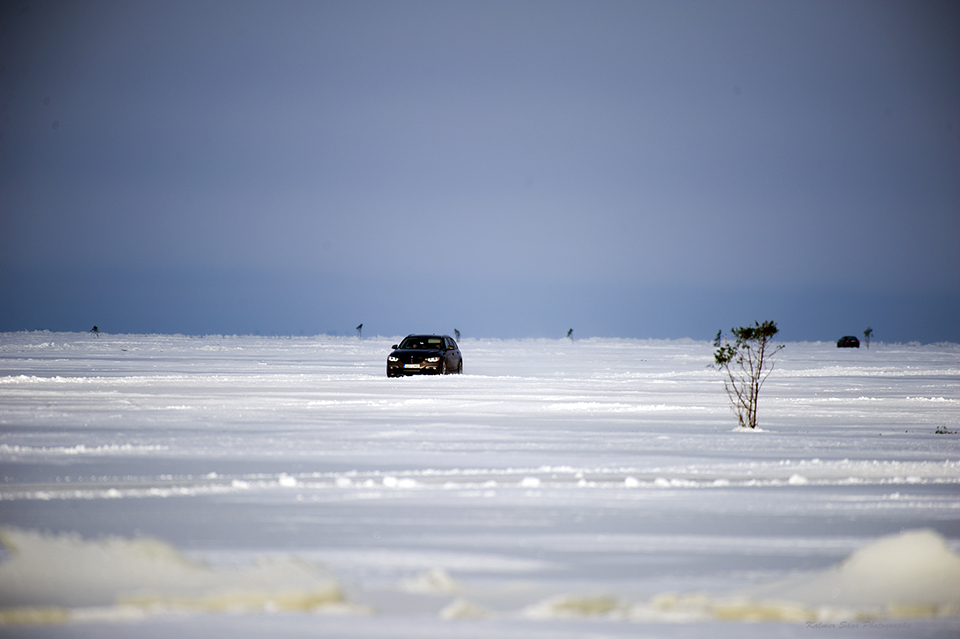
This winter Estonia opened 39 kilometres of official roads across the frozen Baltic Sea — the longest open-sea ice road network in the world during the 2025/2026 season. Built and operated by infrastructure company Verston for the Estonian Transport Administration, the temporary sea routes connected island communities with the mainland for several days in February.
For centuries, Estonia’s island communities have depended on winter to connect them to the mainland. When the Baltic Sea froze hard enough, ice roads formed — and islanders could drive across the sea for food, medicine and family.
It is one of the oldest infrastructure traditions in Northern Europe — and one that climate change is slowly erasing. This winter, that tradition returned.
The 2025/2026 season was the first in approximately eight years, when it was cold enough to open any official sea ice roads in Estonia. Temperatures dropped repeatedly below –20°C, and a long, stable cold period froze the Baltic Sea along Estonia’s western coast.
Commissioned by the Estonian Transport Administration, Estonia’s largest road construction and maintenance company Verston built and operated 39 kilometres of official public road across frozen seawater, simultaneously across three separate stretches of the Baltic Sea.
Nearly 7,000 vehicles made the crossing between the Estonian mainland and its islands on roads Verston created and maintained. The roads opened when conditions allowed, closed when safety required, and reopened again when ice conditions improved. No serious incidents occurred during the season.
The world’s longest open-sea ice road network
At peak season on 15 February 2026, all three ice roads were open simultaneously — making Estonia’s network, according to public records, the largest open-sea ice road network in the world that winter.
Sweden’s Luleå archipelago ice roads reached 24.7 kilometres, while Finland’s Hailuoto ice road measured approximately 8–10 kilometres.
Estonia’s three ice roads — Tärkma–Triigi (17 km), Lao–Kihnu (12 km) and Rohuküla–Sviby (10 km) — together exceeded the length of those networks combined. Depending on weather conditions, the Estonian ice roads remained open between 8 and 11 days during February.
The road that rebuilds itself every night – or breaks
Building a road on the sea means building on a surface that is constantly changing.
Every night the ice shifts. Water levels rise. Cracks appear where there were none before. The temporary bridges installed over those cracks can sometimes be lifted off the surface by morning. In some cases, entire sections of the route must be relocated before the road can safely open for the day.
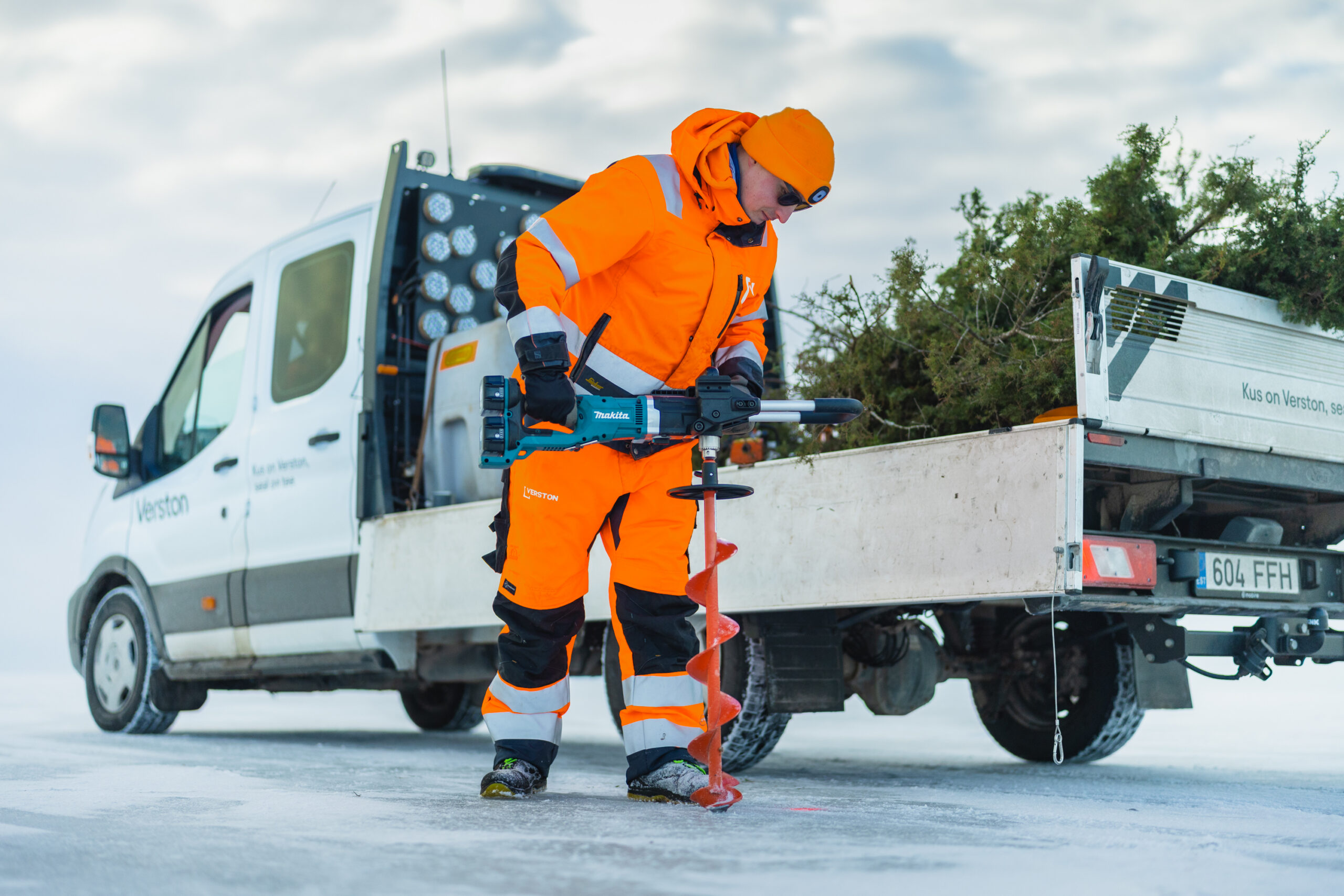
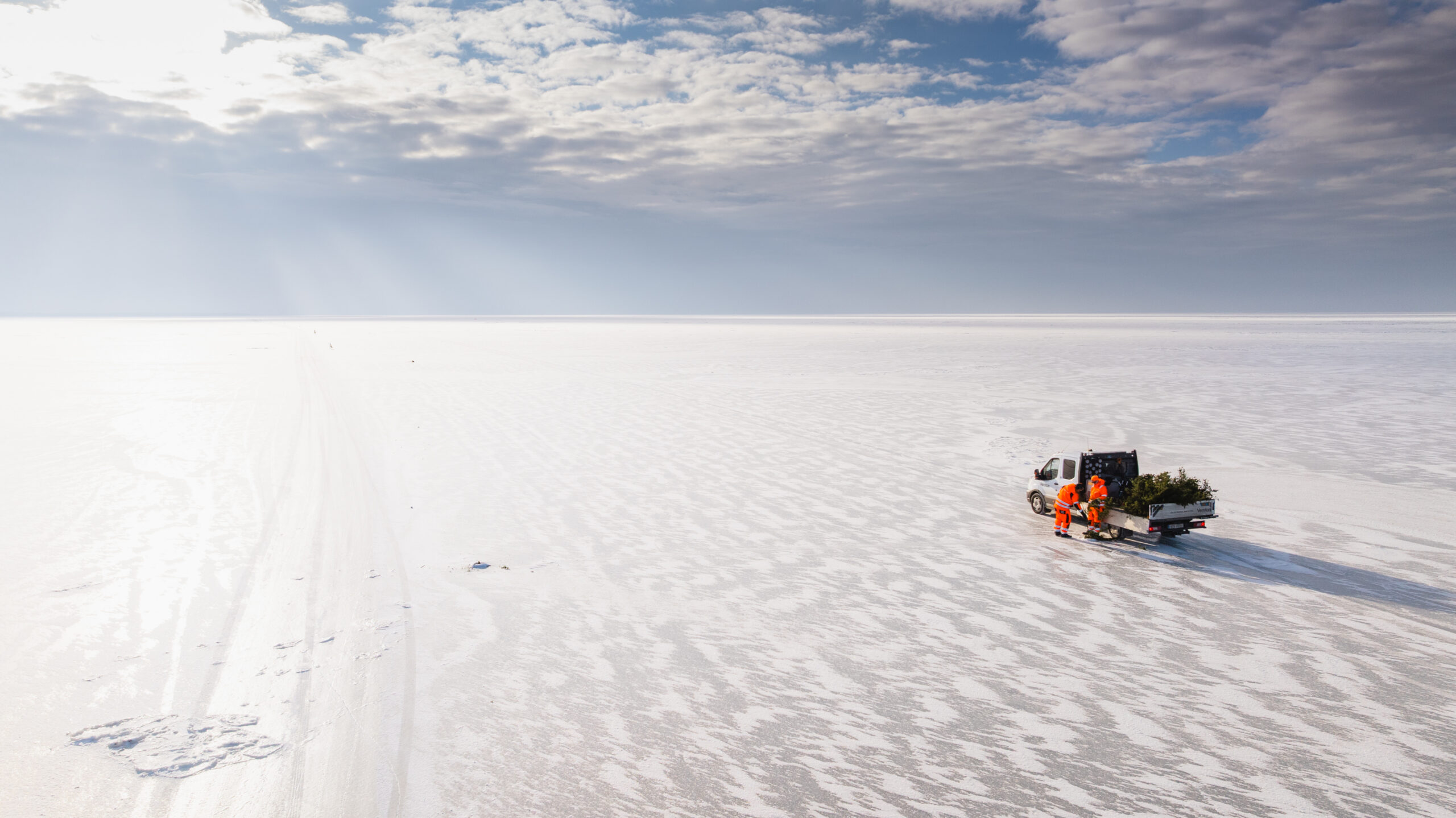
Each morning, before a single vehicle was allowed onto the ice, Verston’s teams drove the entire length of the routes to inspect conditions. If it was safe, the road opened. If not, repairs were carried out or the road remained closed. Both ends of each ice road were staffed around the clock throughout the operating period.
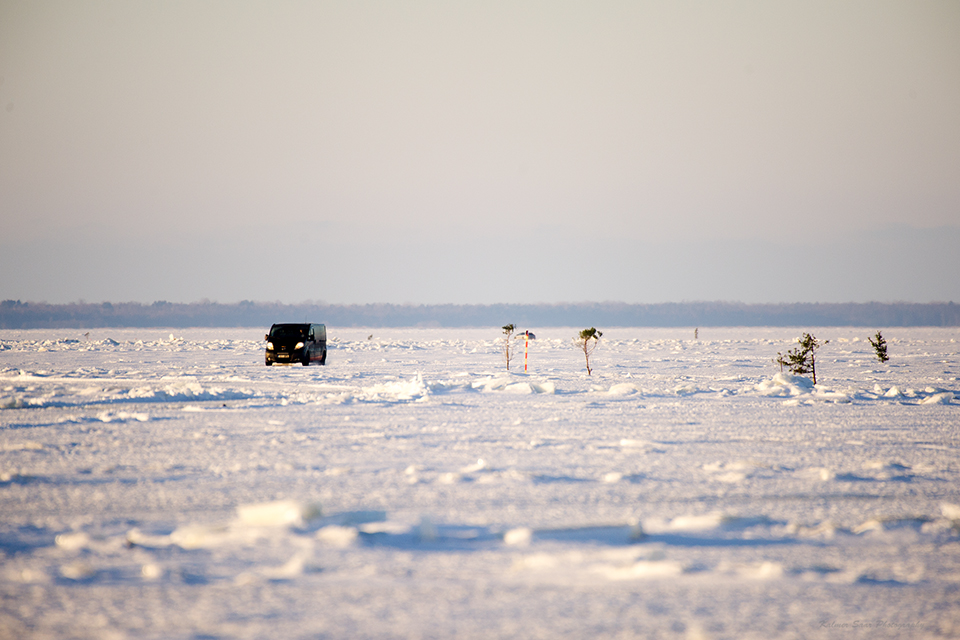
Construction begins with measuring ice thickness every 100 metres along the route corridor. The minimum required thickness is 24 centimetres. Pressure ridges in the sea ice are milled flat, bridges are installed over cracks, and the route is marked using traditional juniper stakes.
Why driving speed matters on ice
Driving on an ice road follows strict safety rules. At speeds between 25 and 40 km/h, a moving vehicle can generate resonance waves in the ice — flex patterns that amplify as the vehicle moves forward and may weaken the ice structure. For that reason, official regulations require drivers to travel either below 25 km/h or above 40 km/h.
Additional safety rules apply: vehicles may weigh no more than 2.5 tonnes, a minimum distance of 250 metres must be maintained between cars, and driving is permitted only during daylight hours. Seatbelts are kept unfastened to allow passengers to exit the vehicle quickly if necessary, and stopping on the ice road is not permitted.
A window that is closing
The Baltic Sea is currently the fastest-warming coastal sea in the world, and the long, stable freezing periods needed for open-sea ice roads are becoming increasingly rare. Many recent winters have produced no ice roads at all.
What was once an annual winter connection between islands and the mainland has increasingly become an exceptional event. With it, the traditions and rhythms of life built around winter crossings are slowly fading.
This winter, all three roads opened. It may be years before conditions allow it again.
Urmas Jõeveer, Head of Maintenance at Verston Estonia:
“A sea ice road is never finished. The surface moves, cracks and reacts to temperature and traffic load — sometimes within hours. Our teams inspected the routes every morning before opening them and monitored the roads continuously while they were in use.
Nearly 7,000 vehicles crossed the ice roads this winter. For island communities, it was not a curiosity — it was an important connection between islands and the mainland.
For our teams it was also one of the most demanding seasons in recent years, as we were operating the ice roads while at the same time maintaining state highways across Estonia.”
Facts: three open-sea crossings
- Tärkma–Triigi — 17 km across the open Baltic between Saaremaa and Hiiumaa. 2,449 vehicles. 11 days open.
- Lao–Kihnu — 12 km to the island of Kihnu. 2,104 vehicles. 8 days open.
- Rohuküla–Sviby — 10 km to the island of Vormsi. 2,332 vehicles. 10 days open.
- Total: 39 km of road on open sea. 6,885 crossings. Zero serious incidents.