



Ice Roads Estonia 2026: Building and Maintaining Public Roads on the Frozen Sea
In Estonia, winter can transform the landscape in extraordinary ways.
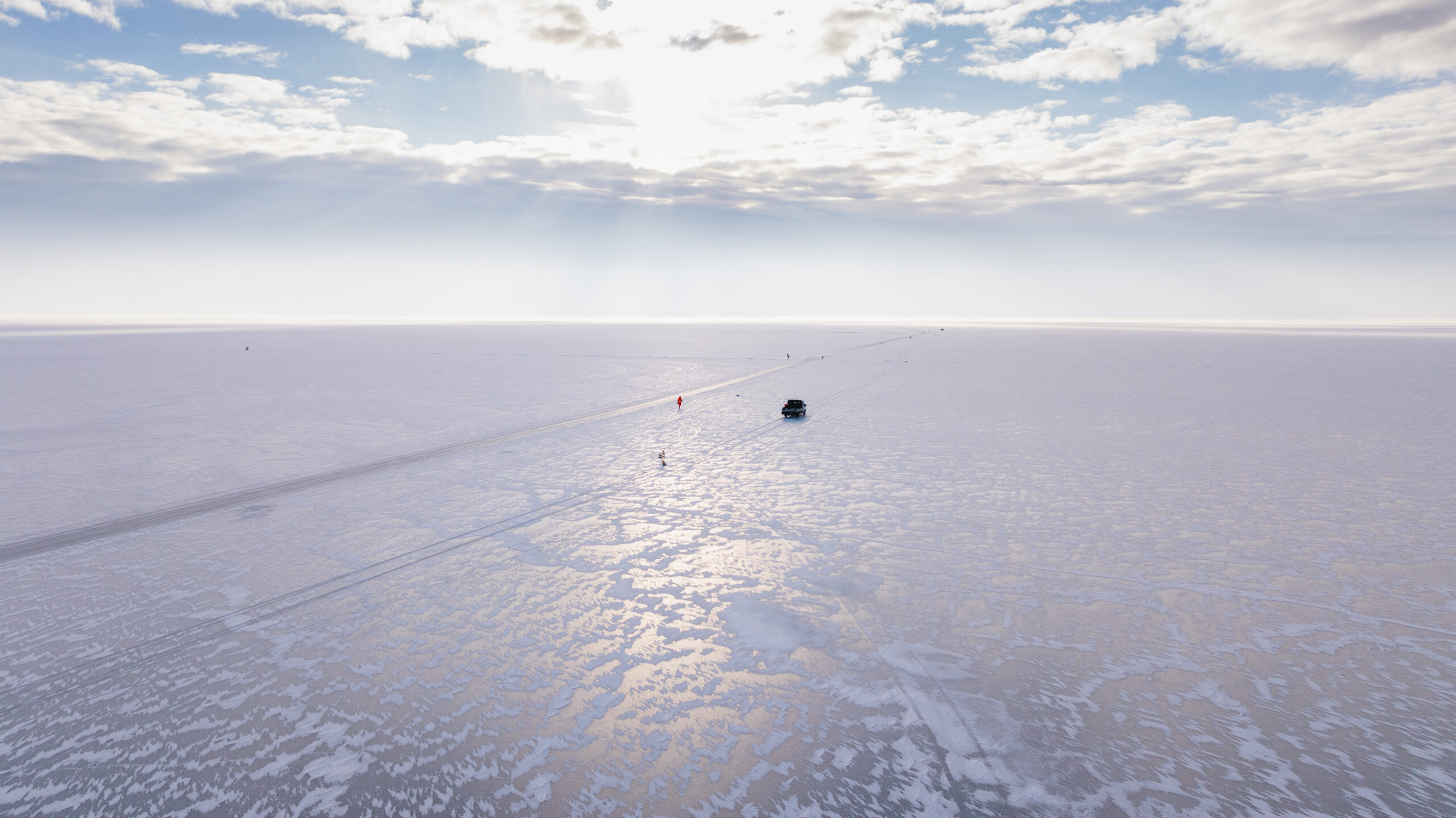
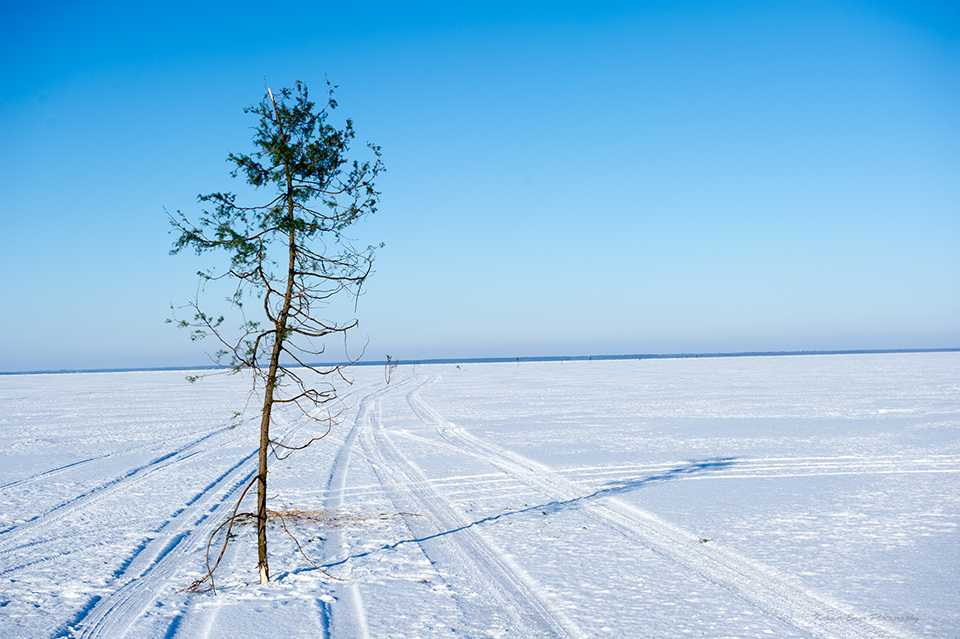
When the sea freezes long and steadily enough, it becomes something unexpected — a road.
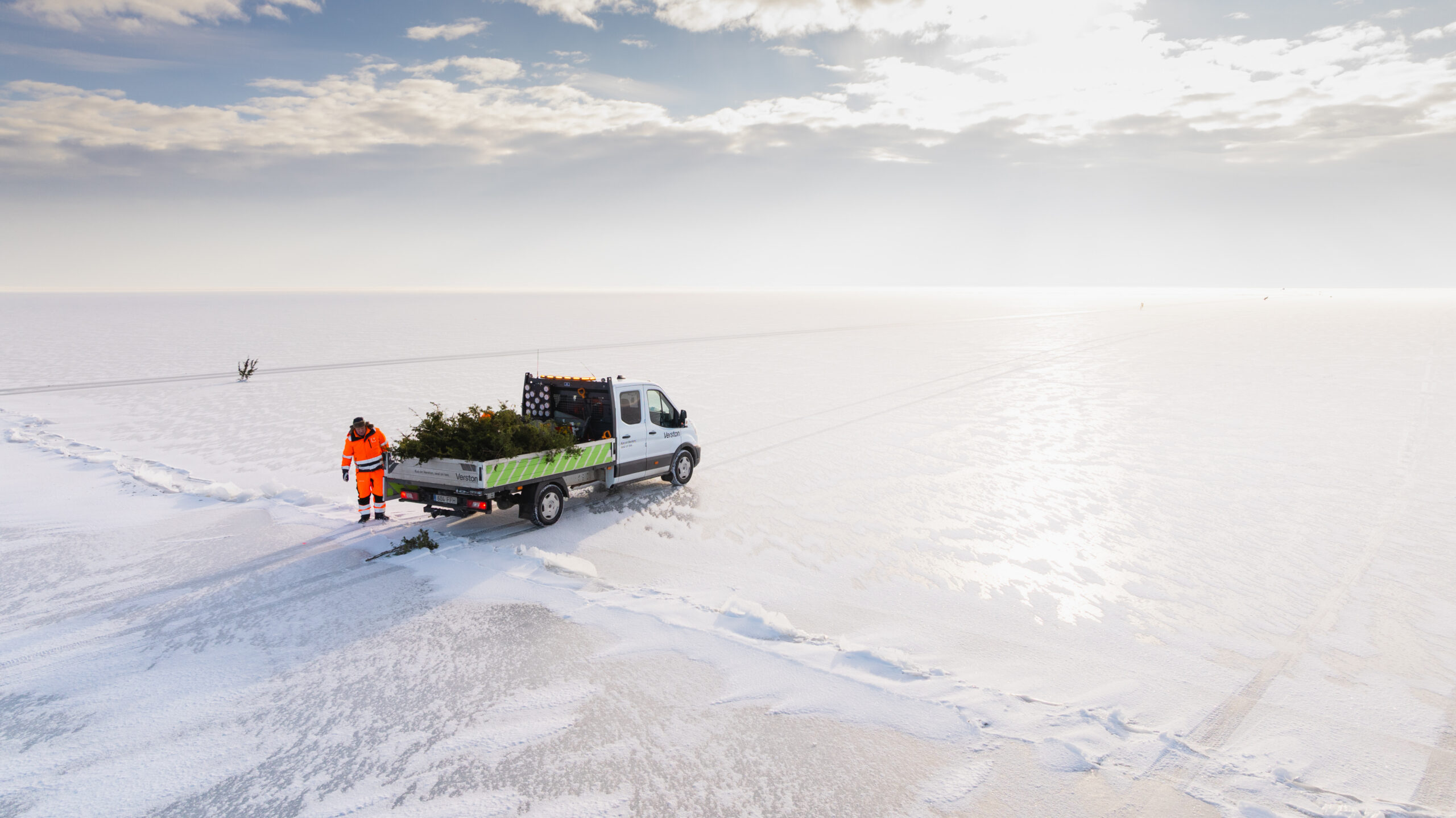
During the winter of 2026, Verston built and maintains three official ice roads in Estonia, commissioned by the Estonian Transport Administration:
- Tärkma–Triigi ice road (Saaremaa–Hiiumaa) – approximately 17 km
- Lao–Kihnu ice road (mainland to Kihnu) – approximately 12 km
- Rohuküla–Sviby ice road (mainland to Vormsi) – approximately 10 km
These are not informal winter tracks. They are officially regulated public roads, opened and operated under strict safety standards.
Building roads on ice is not about creating something from scratch. The material — the frozen sea — already exists. The responsibility lies in shaping it, understanding it, and keeping it safe.
An Ice Road Begins with Conditions, Not Construction
An ice road can only be established after a sufficiently long and stable freezing period. The ice must form a uniform and reliable load-bearing layer. The minimum required ice thickness for vehicle traffic is 24 centimetres. But thickness alone is not enough. Ice structure and consistency across the entire route must be carefully assessed.
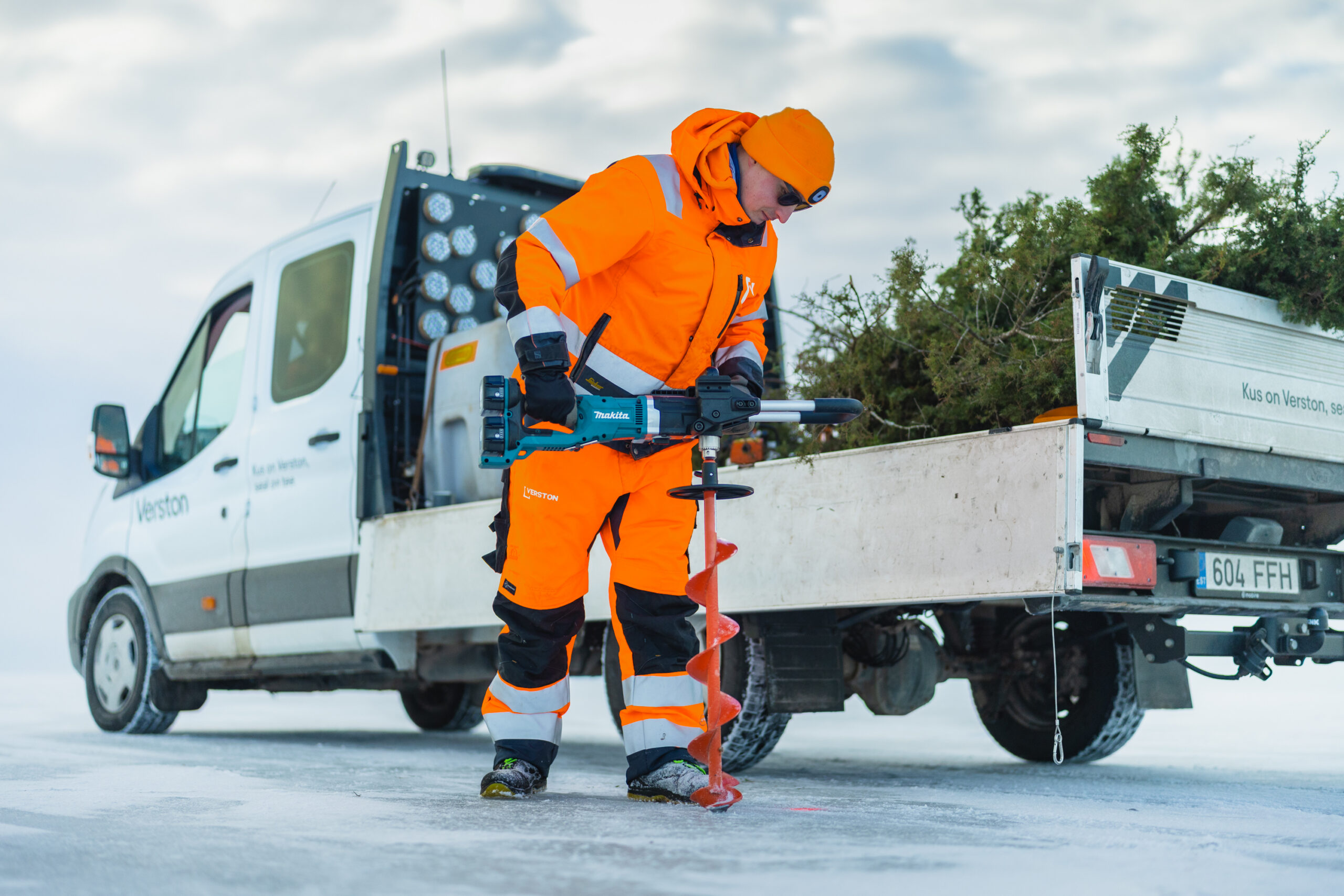
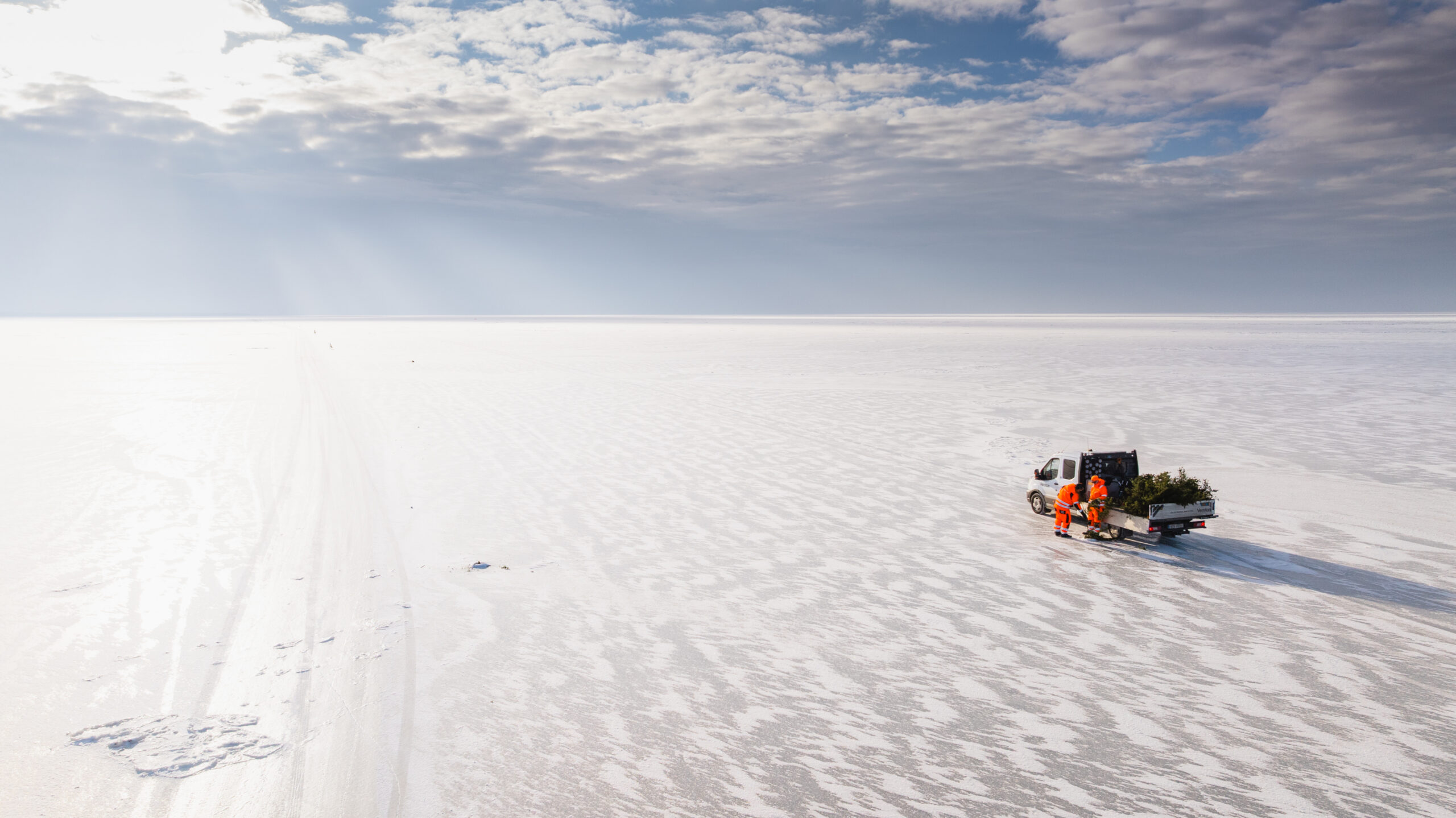
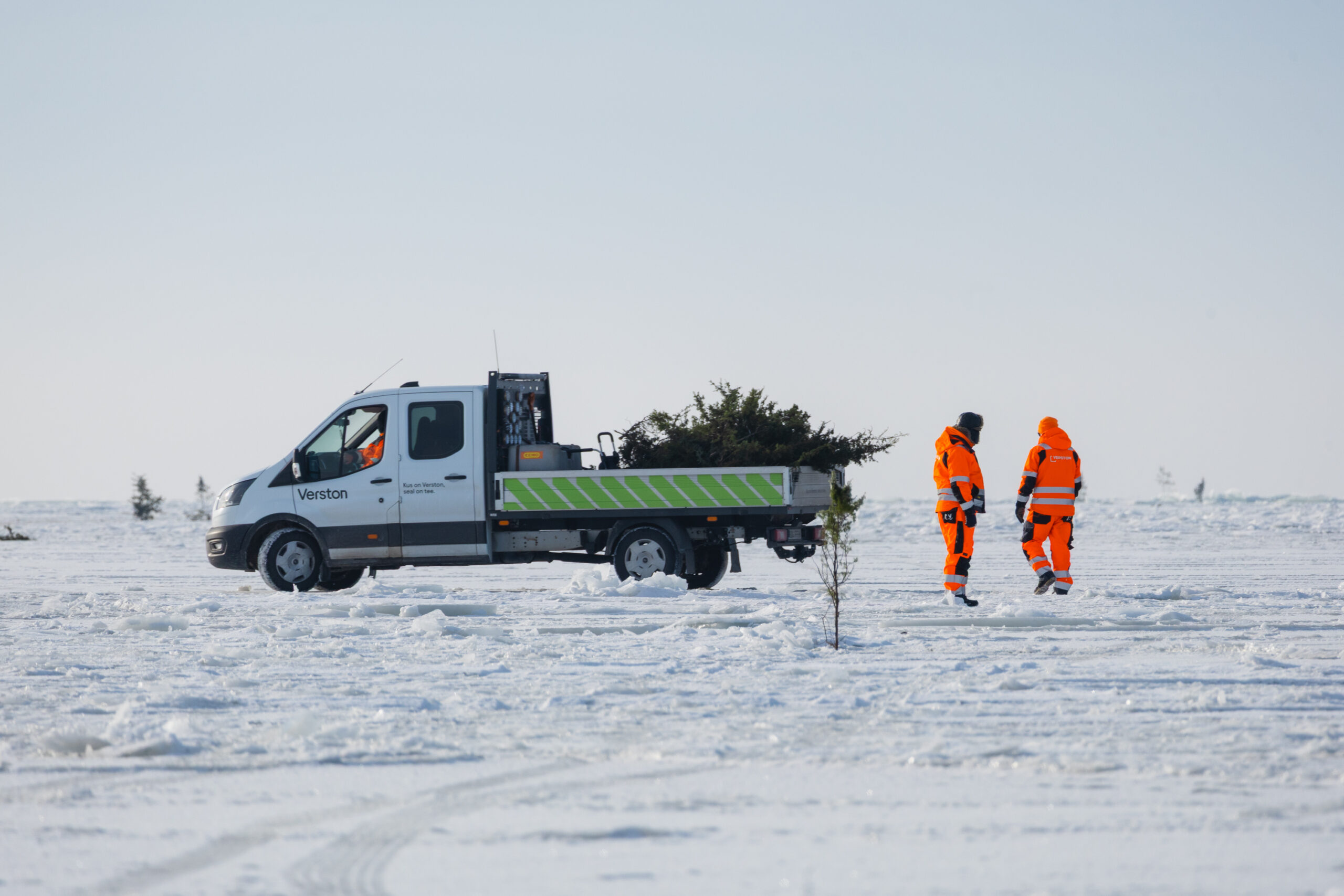
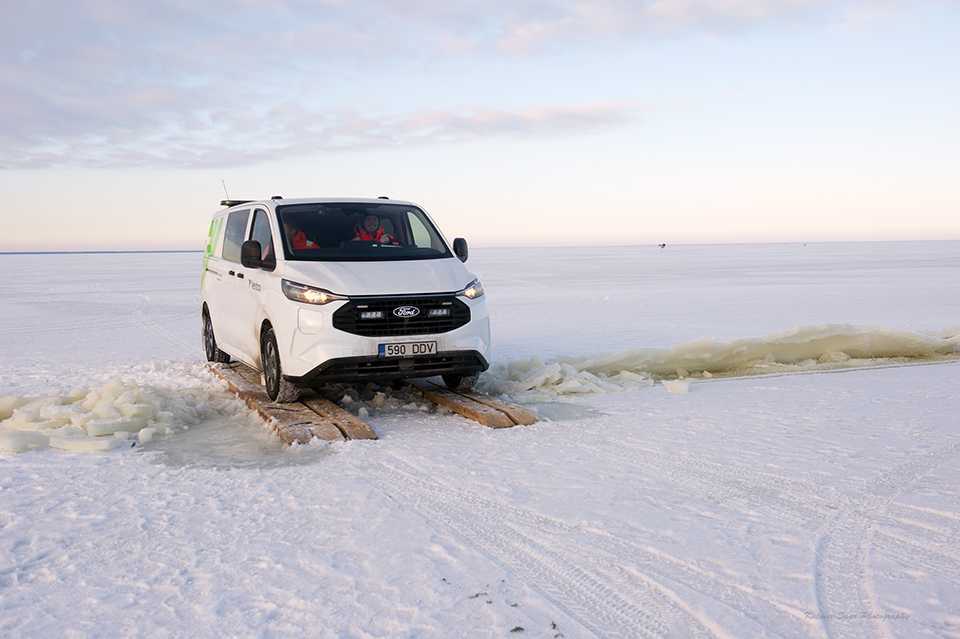
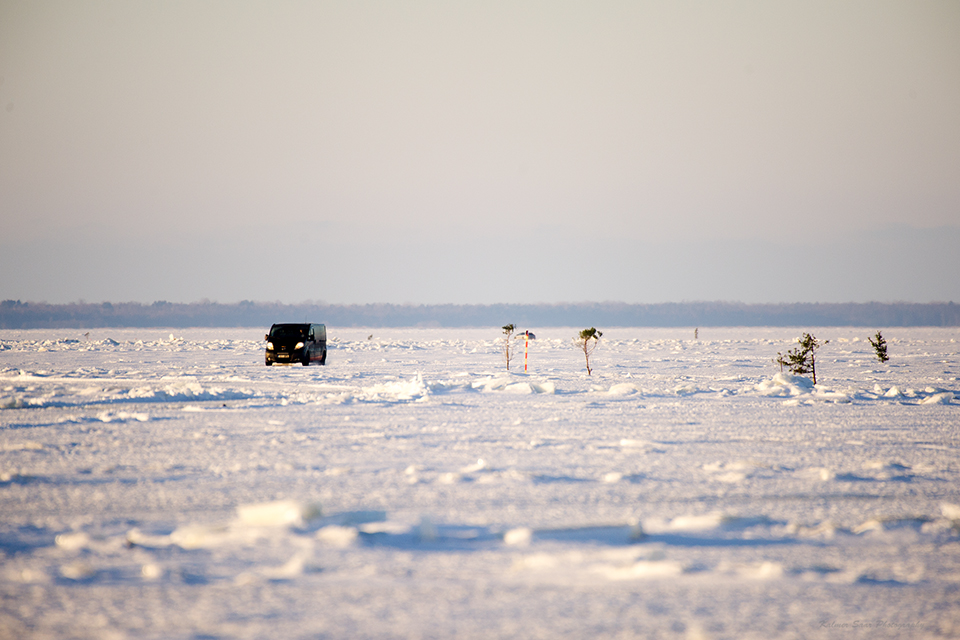
During the survey phase, holes are drilled into the ice at least every 100 metres. Only after confirming sufficient thickness and quality can a safe route corridor be defined. At sea, ridged ice must often be milled down to create an even driving surface. Natural cracks may require temporary bridges. The route is carefully marked to guide vehicles safely across the frozen sea.
Only once all safety requirements are met can the ice road be opened to traffic.
A Road That Is Never Finished
Unlike permanent asphalt roads, an ice road is never complete. Ice conditions change continuously. Sunlight, wind, water level fluctuations and traffic load all influence the structure of the ice. New cracks may appear overnight. Water levels may rise. Bridges over cracks may need to be relocated.
For this reason:
- Vehicle weight is limited to 2.5 tonnes.
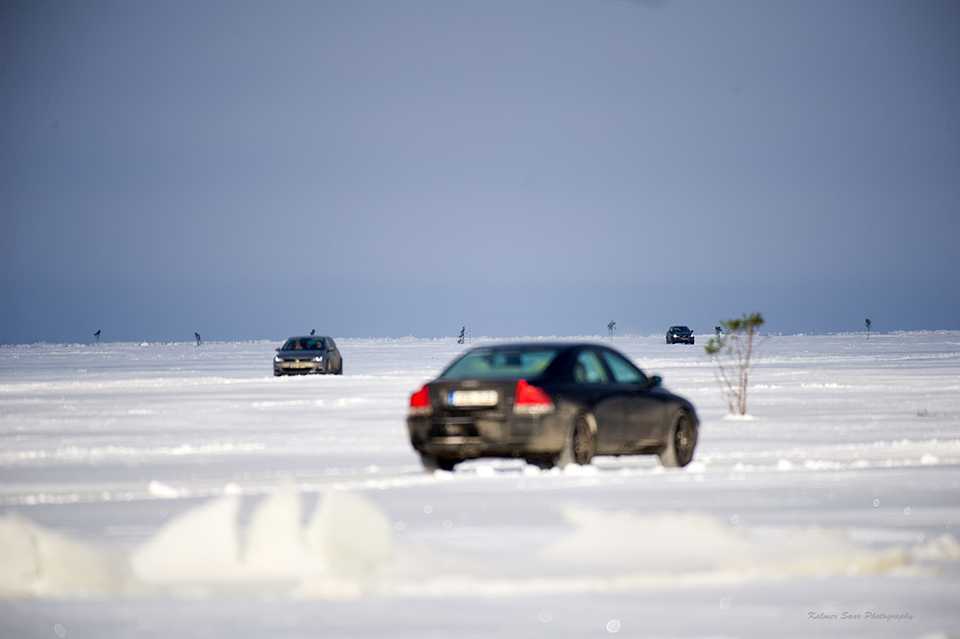
- Cars enter the ice road at least two minutes apart.
- A minimum distance of 250 metres must be maintained between vehicles.
- Traffic is allowed only during daylight and under sufficient visibility.
Maintaining an ice road means constant observation and readiness to act. Cracks are filled with water so that freezing conditions can “grow” them shut. Temporary bridges are installed or moved. Alternative route corridors may need to be prepared in parallel.
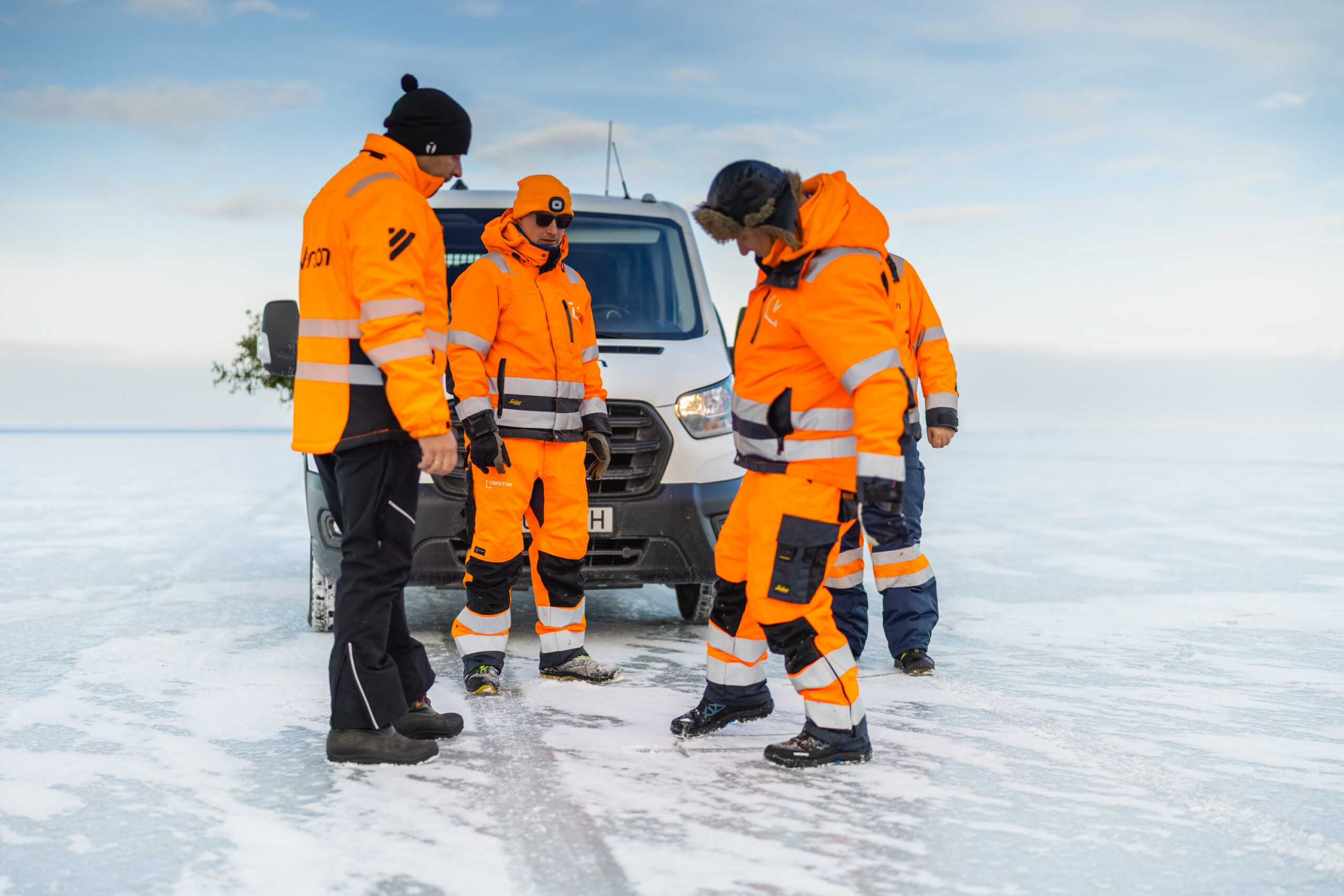
Each ice road operates with 24/7 on-site supervision at both entry points, and the route is inspected daily. Responsibility does not end when the road opens. It continues every day the road remains in use.
Building Roads on Ice Is About Responsibility
Ice roads connect island communities to the mainland during winter. They provide mobility when maritime conditions may be difficult. Yet they are temporary by nature. Their lifespan depends entirely on weather and environmental dynamics. If conditions become unsafe — due to snowfall, low visibility, rising water levels or structural instability — the road must be closed immediately.
Operating an ice road requires:
- continuous risk assessment
- understanding of environmental forces
- disciplined traffic regulation
- and operational flexibility
It is infrastructure shaped by both nature and human judgement.
Heritage in a Changing Climate
For generations, frozen sea routes have connected Estonia’s islands to the mainland. Ice roads are part of the country’s living winter heritage — a seasonal adaptation rooted in geography and community life.
Today, however, the climate context is changing. Long and stable freezing periods are becoming less predictable. Some winters no longer allow ice roads to be opened at all. What was once a regular seasonal solution is increasingly becoming a rare phenomenon.
There has been public discussion in Estonia about whether the Baltic Sea ice roads could one day merit recognition on the UNESCO World Heritage list — reflecting their cultural, historical and environmental uniqueness. No formal nomination has been submitted. Yet the discussion itself highlights how distinctive these climate-dependent connections are.
Ice roads demonstrate how infrastructure can adapt to natural conditions — but they also remind us that some forms of infrastructure may depend on climatic realities that are shifting.
When the Sea Freezes, We Build — and We Monitor
For Verston, building ice roads is not about spectacle. It is about safety, responsibility and trust. It is about working with natural conditions rather than against them. It is about maintaining public roads in environments where the ground itself is temporary.
When the sea freezes, we build.
And we continue working — every day — for as long as the ice allows it.